Column Vol. 1
Why “The Breathing Home” Now? Rethinking True Comfort and Health from the Problem of Condensation
Ono from Wald
Over the next several columns, I will be discussing the core philosophy and specific technologies behind the “truly comfortable and healthy home building” that we at Wald practice and advocate. Thank you for joining me.
The Common Misconception of “Comfort”
When you imagine a “comfortable home,” what comes to mind?
Many of you might think of a “house that is cool in summer and warm in winter”—in other words, a “highly airtight and highly insulated home.”
It is true that enhancing the airtightness and insulation of a house is an essential element of modern home building, especially from an energy-saving perspective. However, we believe that true comfort cannot be achieved solely through the pursuit of “high airtightness and high insulation.”
In fact, this pursuit carries the risk of causing a “serious problem.”
The Hidden Danger: Interstitial Condensation
That problem is “interstitial condensation,” which progresses silently within walls where it cannot be seen.
A highly airtight and insulated home, much like a thermos flask, maintains a significant temperature difference between the indoors and outdoors. This large temperature difference is the primary cause of condensation.
In winter, the warm, moist air from indoor heating tries to penetrate the walls. The moment it touches a cold part inside the wall (closer to the exterior), the water vapor turns into droplets, and condensation occurs.
The Flaw in Conventional Solutions
Traditional home building tries to prevent this moisture from entering the wall by installing a “vapor barrier” (or vapor retarder sheet) meticulously on the indoor side. However, we question this approach of “perfectly sealing in moisture.”
Data shows that even a tiny gap—just 1mm wide and 1m long—resulting from construction imperfections or age-related degradation, can allow as much as 360g of water to infiltrate the wall assembly in a single day.
Once inside, this moisture is trapped by the vapor barrier, finding no escape. As a result:
- The insulation becomes wet and loses its effectiveness.
- Mold begins to grow.
- Eventually, it can cause the structural components of the house, like columns and foundations, to rot.
This not only shortens the lifespan of the house but also directly leads to serious health issues for your family, such as allergies and sick building syndrome, as mold spores are released into the indoor environment.
A New Approach: Learning from Science
So, how can we solve this problem?
The theoretical pillar for our solution is the research of Dr. Tim Padfield from the Technical University of Denmark. Dr. Padfield has conducted extensive research on the mechanisms of condensation and the “role of absorbent (hygroscopic) building materials” in preventing it.
The core of his theory lies in the control of “Relative Humidity (RH).” Condensation occurs when the air becomes “saturated” (100% RH) and can no longer hold any more water vapor.
Dr. Padfield’s work revealed that porous, natural materials like wood and earthen walls possess a superior ability to automatically regulate humidity (a humidity buffering capacity). They “absorb” water vapor from the air when humidity is high and “release” it when the air is dry.
Our Philosophy: The “Breathing Home”
Based on this scientific knowledge, we advocate for “Breathability” as the guiding philosophy for all our home building.
This does not mean a house with drafts (air leakage) at all.
A “Breathing Home” is one where the entire structure manages moisture, almost as if it were alive. Specifically, it is a design that maximizes the following three capabilities inherent in building materials:
- Hygroscopicity: The ability to absorb and release water vapor from the air to stabilize humidity.
- Capillarity: The ability to quickly wick up, disperse, and dry out liquid water (should condensation occur) via capillary action.
- Permeability (Vapor Diffusion): The ability to safely transport moisture vapor through the wall assembly to the outside.
Instead of “trapping” moisture with a vapor barrier, our fundamental philosophy at Wald is to “accept, control, and safely release” moisture using the power of high-performance natural materials.
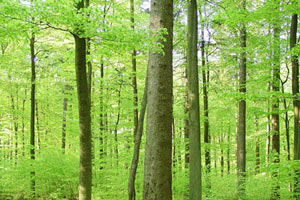
Our company name, “Wald,” means “Forest” in German. We believe that just as the trees in a forest maintain their environment according to natural principles, a home should also “breathe” and exist to protect the health and comfortable lives of the families who live there.
Coming Next
Starting next time, I will delve into the specific technological elements we have carefully selected to achieve this ideal of the “Breathing Home”—including “DAKO” high-performance windows from Germany, “PAVATEX” wood fiber insulation, and the “PS Radiant Heating & Cooling System.”